Fortsett å se
 Gå til handlekurv

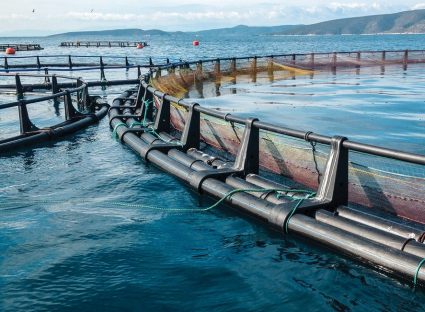
Enten du jobber med havbruk eller ønsker en karriere innen oppdrett.

Enten du jobber offshore eller ønsker en karriere offshore.

Ønsker du å bli elektriker? Ta det første skrittet for å få både fagbrev og jobb.




 Vis alle Kurs

STCW safety course, formerly known as IMO50/IMO60, is a mandatory minimum requirement for personnel who will serve onboard boats, ships or fishing vessels.

The course is designed for seafarers, fishermen and others working in the maritime sector, focusing on dealing with various situations that may arise at sea. It covers important topics such as rescue techniques, fire fighting, first aid, and personal safety, all essential for effectively and safely handling challenges. You will gain valuable knowledge and skills crucial for maintaining the safety of the crew and vessel in maritime environments.
If you have previously completed the STCW Basic safety course for Seafarers and are looking to update your certificate, you can take this course to refresh your skills for another 5 years – STCW Refresher course for Seafarers.
This course combines e-learning with traditional teaching. Prior to attending the course center, you are required to complete the e-learning modules from home. This reduces the duration of your stay at the course center by 1 day. Following the completion of the e-learning component, you will then spend 1 days at the course center to finish the remaining teaching sessions.

Requirements
There are no requirements for prior knowledge.
Implementation
Before the course begins, you are required to complete an e-learning module, which approximately takes 5 hours. On the first day of the course, there will be a theoretical exam based on the content covered in this e-learning module. You will be assessed throughout all practical training, and a final written test at the end of the course.
The course includes lunch and the course certificate, but not accommodation and transport.
Refresher
To continuously maintain a approved STCW certificate, you must undergo a refresher course every 5 years.
Once we have finished your order, we will send a course confirmation with practical information.
Including address, transport and agreed prices for accommodation.
Stavanger
Kontinentalveien 33, 4056 Tananger
Accommodation: Scandic Stavanger Airport is 11 minutes by car from the course center.
Bergen
Espehaugen 25, 5258 Blomsterdalen
Accommodation: Scandic Flesland Airport is 2 minutes by car or 11 minutes on foot from the course center.
Grimstad
Østerskogen 24, 4874 Grimstad
Accommodation: Strand Hotel Fevik and Grimstad Clarion are 10–15 minutes by car from the training center.
Haugesund
Haglandsvegen 20, 5514 Haugesund
Accommodation: Scandic Haugesund is 13 minutes by car from the course center
Content
Tables


Change of course date
Have to be agreed up to 3 days before the start of the course during office hours: 08:00-16:00
Deregistration
How often do I need to take refresher courses?
To maintain a continuously approved certificate, you must take a refresher course every 5 years. Seafarers who have not completed the refresher course within the deadline must take a new basic course. Alternatively, 12 months of documented sea service within the last 5 years.
What is the abbreviation STCW for?
STCW stands for the International Convention on Standards of Training, Certification and Watchkeeping for Seafarers. This convention from 1978 sets qualification requirements for shipmasters, officers, and watchkeeping personnel on merchant vessels. It specifies the knowledge and training ship captains, officers, and other seafarers must have to be competent and safe when sailing the seas.
What are IMO50/IMO60 courses?
Previously, STCW courses were divided into courses with names like IMO (IMO 60, IMO 80, IMO 50, IMO 66). IMO stands for the International Maritime Organization, which develops comprehensive regulations for shipping, safety at sea, and prevention of pollution from ships. STCW is an international convention adopted by IMO to establish standards for training and certification of seafarers. Therefore, these safety courses are now called STCW courses, tied to the requirements of the STCW Convention, which is a product of IMO.
Can I work on a fishing boat with an STCW Seafarers certificate?
Yes, you can work on a fishing boat with an STCW Seafarers certificate as stated in the Regulation on Safety Training for Fishermen § 3, which requires those working on a fishing boat to have completed at least 40 hours of basic safety training. Safety courses in countries other than Norway are also accepted if they are at least 40 hours long, and the administration of safety training finds that the course content meets the curriculum for safety training for fishermen.
What education do I need to become a fishing vessel skipper?
If you are going to become a Fishing Vessel Skipper, there are several paths you can take. You can first obtain a certificate as a fisherman, and later take courses and exams to obtain a certificate for D6 vessels for commercial use up to 24 meters. Then you can obtain a certificate for a Fishing Vessel Skipper Class C for fishing vessels up to 15 meters, if you are fishing near the coast and plan to operate along the coast to balance family life and career choice. The size of the vessel determines the necessary education; if you aim to be a skipper on larger fishing vessels, vocational school and sea time on ocean-going vessels may be necessary.
What courses must one have to work on a boat?
Everyone working on a boat or ship must have STCW Seafarers’ Safety Training. Everyone working on passenger ships must also have STCW Crisis and Passenger Handling. Engine officers must also have STCW Advanced Safety Training (IMO80) and STCW Updating for Engine Officers every 5 years. Deck officers must have STCW Advanced Safety Training (IMO80) and also STCW Medical Care for Seafarers. They must also take an STCW Updating for Deck Officers including STCW Medical Care every 5 years.
Is it voluntary to take safety courses for fishermen when over 67 years old?
According to the Norwegian Maritime Authority – Qualification Requirements for Crew on Fishing Vessels, there are the following conditions:
For fishermen (not navigators) who are 67 years or older, safety training is voluntary. For fishermen (not navigators) over 60 years old, refresher courses are voluntary. For those who want to try working as fishermen, it may be possible to get an exemption from the requirement for safety training. See guidance on exemption from the requirement for safety training on the right side.
What is the difference between the fishing skipper classes?
The fishing skipper classes in Norway indicate different levels of competence and experience, as well as the degree of responsibility and competence required to be in charge of operations and safety on different sizes of fishing vessels. The certificate you need depends on tonnage, length, and area of operation. Click on the links below to read more about the different fishing skipper certificates:
If you have any unanswered questions, please feel free to contact us below.
